Race report: 2017 New York City Marathon
Posted: 9 November 2017 Filed under: Running | Tags: nyc, nyc marathon, race report, rickierannyc Leave a comment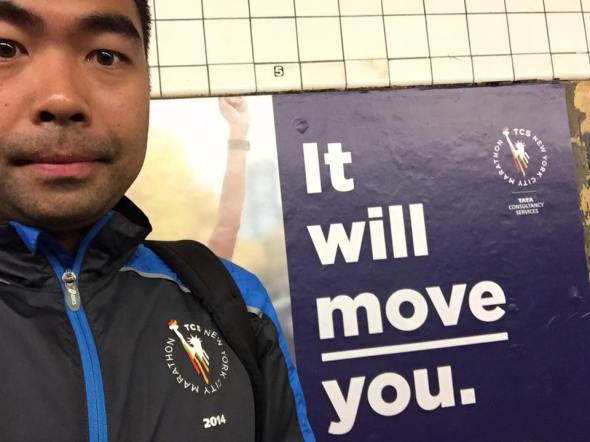
It will move you
So, New York… we meet again!
Returning to NYC for the first time since running the marathon in 2014, I knew going into training that the minimum goal is to beat the 4:55:15 from three years ago.
The 16-week training cycle didn’t start as well as I would have liked; a sore knee was affecting my runs, and even when I wasn’t running. But trips to a physiotherapist and a chiropractor helped improve that. Even so, personal and professional commitments had me move my workouts so that I would go for days without running, then do three runs in four days. And on top of that, I signed up for a Virtual Trainer (VT) program that is based on my goals and past running. While I barely kept up with the workouts provided by the trainer, I enjoyed more the associated Facebook group where I connected with other VT users through advice and support. Over time, my main feed was almost exclusively populated with posts from the VT group.
For the flight to New York, I settled on a non-stop flight from Vancouver to JFK, but it was a red-eye on Cathay Pacific. Once I cleared security at YVR, I forced myself to think in New York time, which actually worked, as I managed to function mostly normally on a full Thursday. For accommodation, I stayed again in Brooklyn; it was a four-storey brownstone where other guests were there for the Marathon, either as runners, or parents or children of runners, or a member of the press corps covering the race.
Heading to Staten Island on race day, I just felt relaxed; as my second NYC Marathon, there wasn’t as much jitters as in 2014. The lines were still there, testing my legs early, and questioning why I’m there, but once in the start village, I was ready to go.
Unlike in 2014, I started on the upper level of the Verrazano-Narrows Bridge, and that was an experience. Also unlike other races, I didn’t have a detailed strategy regarding pacing or milestones. A steady pace, with some surges, was the goal.
The drizzle started early, around mile 3, and never really stopped. It was typical Vancouver weather, and I was enjoying it. The simple shirt-and-shorts outfit was suited for this, and I was glad I didn’t layer up.
As in training, my fueling was necessarily precise: one gel packet every 25 minutes. Sometimes I timed it to be just before a water stop; the rest I used the water bottle I brought with me. That strategy worked; I was expecting some kind of wall or bonk on crossing back to Manhattan from the Bronx, but it never happened. I even picked up a bit of speed along 5th Avenue.
As the miles remaining went to single digits, I did my mental calculations to see if I can make 4:50, since going 4:55 looked likely by the time I entered Central Park. I rounded the turn off Columbus Circle with a chance, but even with a final kick I finished at 4:50:19.
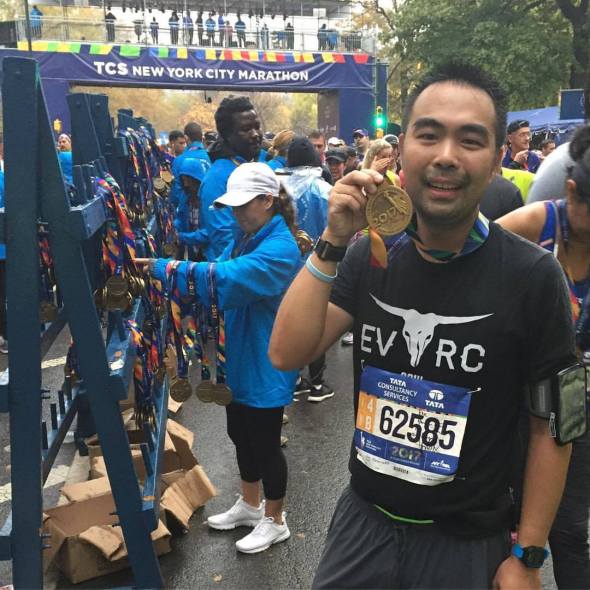
I’m going to print and frame this! Moments after receiving my medal.
I crossed that finish line almost five minutes faster than when I ran the same course in 2014. I ran this marathon end-to-end non-stop without hitting the wall. This is a double win.
I went into this marathon not sure if I’d do another one. The training, while solid at the end, was inconsistent in terms of timing, which is one thing I’d like to control better. But after the way I ran it, I think I want at least one more chance to break my all-time personal best (4:39 in my first marathon in 2009).
For now, I’m going to take it easy until the end of the year. No training, but just run as I feel. I already have a couple races nailed down for 2018, but no marathons, yet…
Result:
4:50:19
32397 overall
21191 male
3571 male 35-39
Race report: 2017 Eastside 10k
Posted: 18 September 2017 Filed under: Running | Tags: east vancouver, eastside 10k, race report 1 CommentThis past weekend (September 17) was the 5th running of the Eastside 10k. It’s become an established event in the Vancouver running scene. The last couple of years in particular were more known for taking place in a cold, wet rain. This year, the weather has been much improved. In addition, the course has changed, away from the viaduct and on to the light-industrial area along Powell Street. For me, this was a good rehearsal for the big test to come on November 5.
I ran this race more than halfway through a 16-week training cycle leading up to the New York City Marathon. The training runs have been good, but various personal and professional demands have been shifting the days I’d normally do my runs. I’ve also had to contend with a niggling knee problem that doesn’t affect my running, but more so between runs. A trip to a physiotherapist in the week before the race showed some great improvements.
As I mentioned earlier, the Eastside 10k route has changed so that it starts and finishes on Cordova Street in front of the Woodward’s development. I think it’s a good move to showcase the fact that the old and new courses pass through Vancouver’s Downtown Eastside, a neighbourhood mostly misunderstood and maligned. But having volunteered in the area gave me a greater appreciation for the vibrant and resilient community that makes up the Downtown Eastside.
The route was extended east to Nanaimo Street, but a straight line out and back isn’t exactly 10 km, so a few creative turns were needed to bring the distance up to the required number. It’s mostly flat, except for the up-and-down of the Powell Street Overpass, and the hill leading up to and around Pandora Park, next to Nanaimo Street. This latter hill was even made into a challenge: the 1.2 km segment was marked by timing mats, and included in the results.
The race organizers made full use of the Woodward’s Atrium and surrounding plaza for the same-day bib pickup (always a good option for those unable to attend pre-race expos) and gear check. The Bicycle Valet was there as well, on Abbott Street.
After warming up, I settled in the start area and waited for the 8:30 am start. Some unexpected issue elsewhere on the course resulted in a slight delay to the start. Once the race got underway, though, I felt I can take on this challenge.
Given what’s been happening with my knee, and it wasn’t an “A” race, I was aiming for at least sub-60 minutes, perhaps -57 minutes. After two kilometres, I knew I can get that 57. I crossed the 5 km mat at exactly 27:30, which put me on pace for 55 minutes, so I was feeling very good.
The weather definitely helped; it was decent for September. It was around 12ºC, and wearing shorts were still OK. This was a great improvement over the last couple of years this race was held, when downpours made for a miserable race experience.
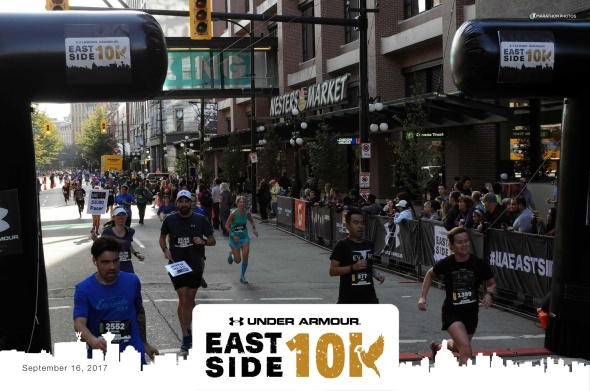
At the finish
I think the weather greatly contributed to how well I did. For the first 9 km, my km splits ranged from 5:20 to 5:36/km. In the last kilometre, I wanted to go under 55:00, so I sped up. Despite the turns and congestion, I managed to go under 5:00/km to finish at 54:02. That was almost three minutes better than my goal!
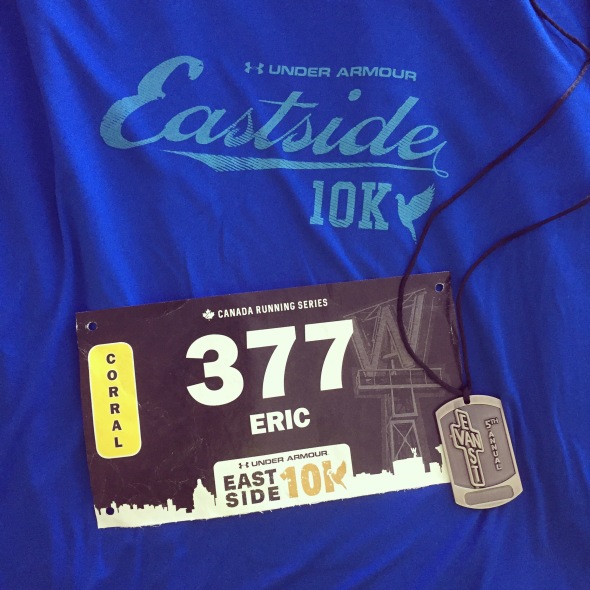
I love this race’s dog-tag medals!
This race result will definitely give me a boost in the final weeks of training for the NYC Marathon. It’s crunch time!
Chip time: 54:02
793/2796 overall
551/1225 males
83/191 males 35-39
Race report: 2017 Scotiabank Vancouver Half Marathon
Posted: 3 July 2017 Filed under: Running | Tags: race report, scotiahalf Leave a commentThe last time I ran this course, it was in 2014. In my report for that race, I took delight in setting a personal best (1:53:36) in the half marathon. I haven’t reached that time since, but felt I can challenge for it at this year’s Scotia Half.
Training started in April, following my usual pattern: tempo, intervals, long run. I also entered into a UBC-based, Nike-sponsored injury-prevention study whose training program just happened to coincide with that for the Scotia Half. (At least I was drawn into the group that used tempo, intervals, short recovery, and long run. Other participants were performing the same workout four times a week.)
One of the aspects of this training program, which was new to me, was the Cooper test. Essentially, you run as far as you can in 12 minutes. The distance you run can be correlated to VO2 max. Over four Cooper tests, I averaged around 2.36 km, which is considered in the “good” range for my age and gender.
My training overall was solid, and I felt I definitely could go under two hours for the Scotia Half. On the Friday before the race, I picked up my bib and t-shirt. A very minimalist presence, which had me in and out in less than 10 minutes. (I arrived home to find out I was given a large t-shirt instead of medium, but not a big deal.)
The weather ultimately played an adverse role that affected my goal. In the week leading up to the race, it had been sunny with temperatures slightly above normal. The forecast for the weekend called for a ramping-up of the temperature, to as high as 30ºC (86ºF) in Vancouver. Unusually true to form, race-day weather lived up to the forecast. At the start time of 7:30am, I estimated the temperature to be around 20ºC (68ºF), already warm for that time of day, and probably not conducive for a fast time.
Nevertheless, I decided to keep a steady pace of 5:30/km (8:51/mi) and see if I can go faster in the second half. The first 10 km or so was mostly in the shade, but in the exposed parts of the course, it did feel warm. By the time I got to the uphill toward 4th Avenue, I felt depleted. I hung on to my pace until about kilometre 15, when a slight uphill was a little much.
And so it became a run-walk process where I tried to hang on to a sub-2:00 finish, then sub-2:05. I wanted to run out the last 2 km, then 1 km. I felt relieved when I got to the finish and found my brother waiting for me; he had finished earlier, with a PB to boot.
A week removed, I’m ok with how I finished. It’s not sub-2:00, but it’s at a sub-6:00/km pace, which is still pretty impressive. The Scotia Half is always a great race, no matter the weather.
I’m keeping it easy for a couple of weeks, and then back to training, this time for the New York City Marathon in November.
Result (placements based on gun time):
2:03:45 chip time (5:51/km, 9:25/mi)
1374/3498 overall
865/1606 males
146/253 males aged 35-39
2016: the year in running
Posted: 31 December 2016 Filed under: Running | Tags: year in review Leave a commentOverall, I think 2016 was a solid year, running-wise. But it could also be a transitional year. I’ll explain that later.
I reached my goal of 1200 km for the year, or an average of 100 km per month. I finished with 1,262 km (784 mi). I achieved one race PB: a sub-25:00 5k in March, without wearing a watch to check my pacing. I somehow achieved placement in my age group in the Lower Mainland Road Race Series. I ran my first back-to-back races, at the Rock ‘n’ Roll stop in Vancouver. Like I said, solid.
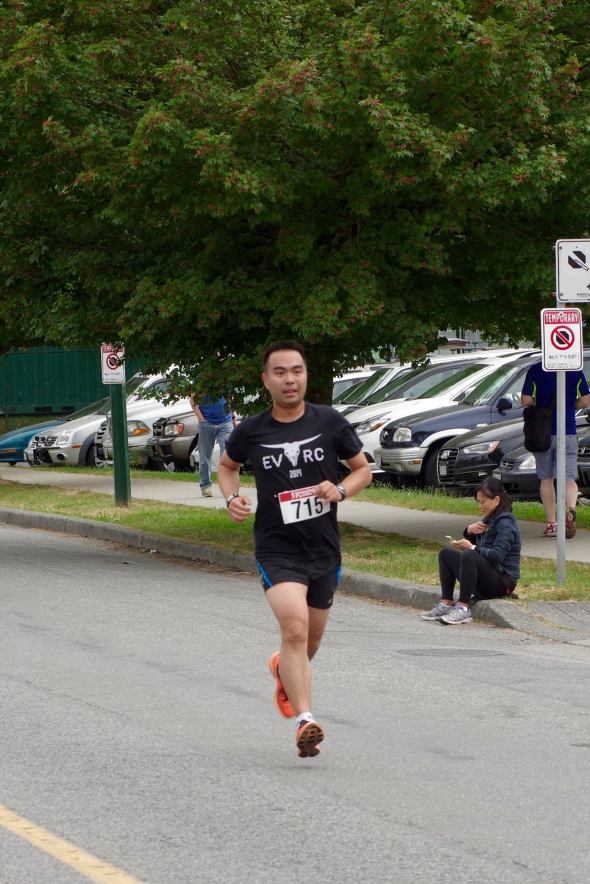
Finish line of Shaughnessy 8k (photo credit: Rick Horne)
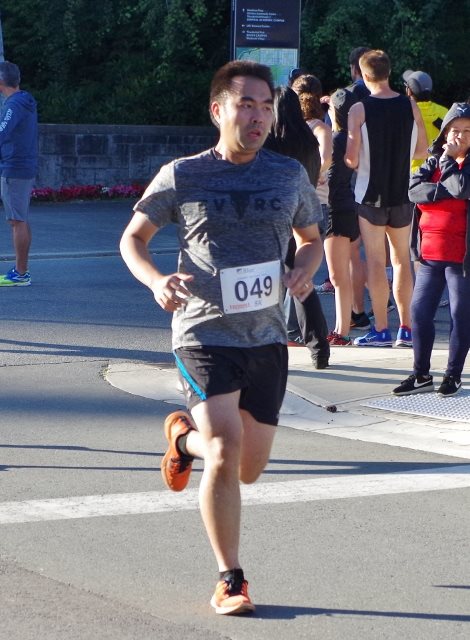
Finish line of Longest Day 5k (photo credit: Debra Kato)
I’m also arriving at the point where there may not be more gains to be had in terms of PBs. One could say that my running is getting close to a midlife crisis, but I’m not conceding it by any means. Still, the aches on parts of my feet are definitely showing, and not really going away.
All of that doesn’t mean I’m stopping, or slowing down my running. I want to continue my minimum three runs a week. I want to continue to challenge myself on races, and there will be opportunity for that in 2017: Scotiabank Half in June, Eastside 10k in September, and another shot at the New York City Marathon in November. I want to get into trail running (I always say that every year), and even try a beer mile. No stopping in 2017; bring it on!
Race report: 2016 Shaughnessy 8k
Posted: 18 May 2016 Filed under: Running | Tags: race report, runemployment, runyvr, shaughnessy 8k Leave a commentMy short-distance racing season continued this past Sunday at the Shaughnessy 8k. It was the first time I ran this race, organized by the Lions Gate Road Runners. For me, it was a chance to stay in training mode, as well as to experience a new race setting.
It was also my first race in my latest runemployment chapter, which gave me a little bit more freedom with when I run and even with whom I run. As a result, I’ve had a few quality workouts in the lead-up to this race.
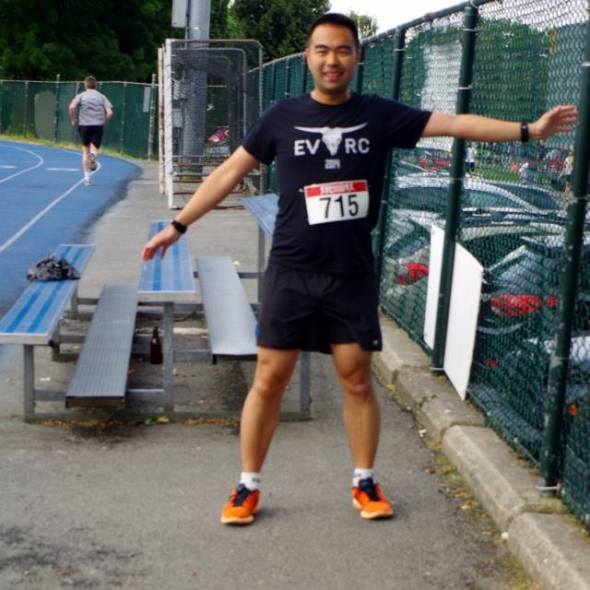
Stretching it out! (Photo credit: Debra Kato)
As I was warming up at the adjacent track, I got my photo taken, mid-stretch, by Debra Kato, who is an incredible supporter of the local running scene; you’ve likely seen her in a costume, taking photos of everyone. (Here’s another photo Debra took of me, after the West Van Run 5k.)
The race itself is a double loop of Vancouver’s Shaughnessy neighbourhood, full of winding streets and, as I discovered, undulating hills. I also discovered that it is a small race, with 222 total finishers this year. It allowed the field to spread out rather quickly; the initial uphill also helped with that. When I looked at the map, I knew there was a hill on 37th Avenue, which I’ve run in the past (uphill in the first kilometre, downhill in the last kilometre), but I didn’t think the rest of it (the 3 km loop section) had hills as well. This is where a preview of the race course would have been helpful.
When I looked at the timed kilometre splits for the race, I somehow held my own on those hills, as most of the splits were within 10 seconds of each other (4:55-5:05/km). I finished in a respectable 40:10.
Going in, I had a few goals for the race: finish under 42 minutes; finish top half or top 100 overall; finish top 10 in my division; and don’t get lapped in the second loop. That last one I thought of as I started the run. I can proudly say I succeeded in all those goals:
40:10
76/222 overall (top half and top 100)
57/119 males
7/10 males 35-39 (only 10 in the group, but it’s still top 10!)
And since I didn’t see the lead pack (or the pace car) until the end, I assume I wasn’t lapped.
I’d definitely do this run again; it’s a good springtime race in one of Vancouver’s nicest neighbourhoods.
Happy 100th birthday, Beverly Cleary!
Posted: 12 April 2016 Filed under: Random | Tags: "beverly cleary", reading Leave a commentToday (April 12) is the 100th birthday of a living literary legend. Beverly Cleary has inspired generations of children through her books, most notably those featuring Henry Huggins and Ramona Quimby.
I count myself as one of Mrs Cleary’s fans. I grew up reading her books; they were among the first I’ve read multiple times. Even now, some of the stories are still vivid in my mind, such as the scene where Ramona, enamored by a girl’s curly hair, reached out and pulled a lock of her hair, getting Ramona into trouble. The name “NOSMO KING” should also be familiar to religious readers of Ramona.
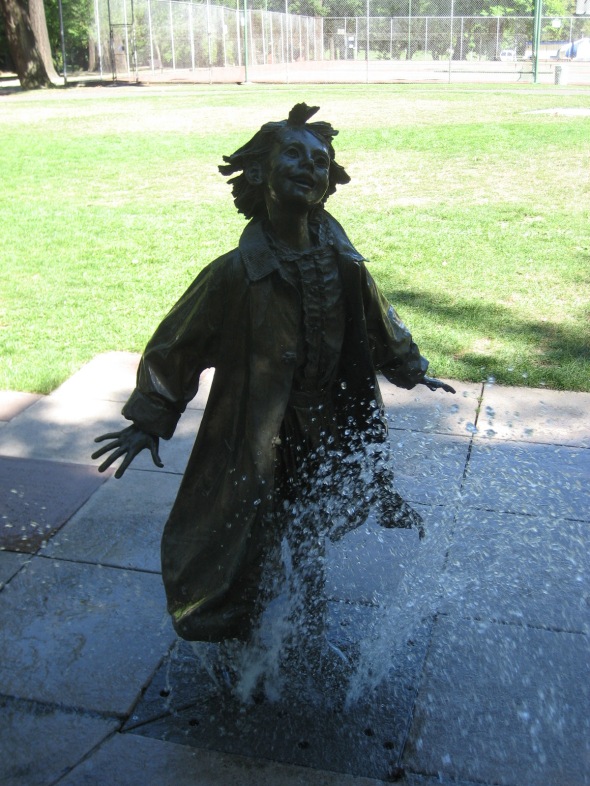
Ramona Quimby statue at Grant Park, Portland
When I visited Portland, Oregon, for the first time in 2007, I made a point to visit the area where the Ramona and Henry books were set (which includes Klickitat Street). In nearby Grant Park, there is a statue garden featuring Ramona, Henry, and his dog Ribsy, immortalizing characters much loved not just in Portland, but around the world.
To mark Mrs Cleary’s milestone birthday, Oregon Public Broadcasting commissioned a short documentary, Discovering Beverly Cleary, that includes insights from the author herself.
Happy birthday, Beverly Cleary!
Race report: 2014 New York City Marathon
Posted: 11 November 2014 Filed under: Running | Tags: marathon, nyc, nyc marathon, race report, rickierannyc 2 Comments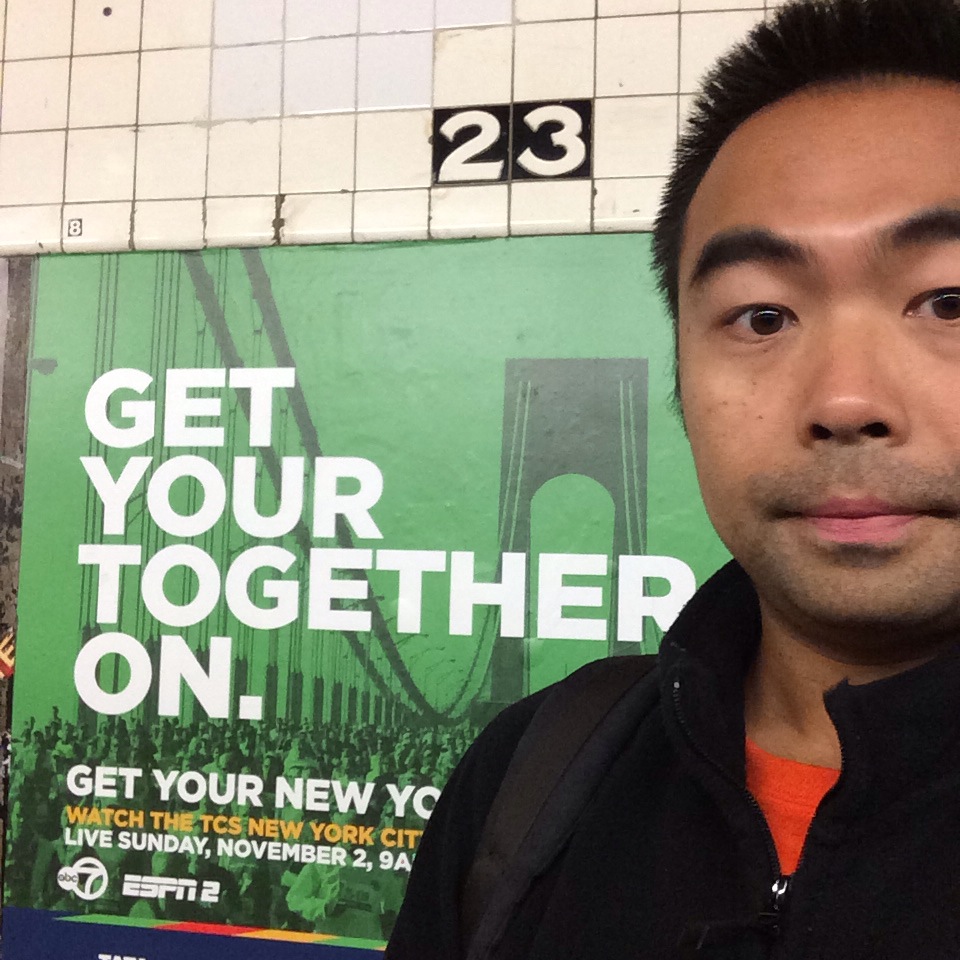
Get Your Together On
It was not my fastest marathon I’ve run, but of the three I have now completed, I must say that this was the most satisfying in that I had a strong finish.
But let’s start at the beginning, in 2012, when I was originally scheduled to run this race. Of course that didn’t happen, and I chose to come back and run it this year. Throughout this training cycle, including two 10k races, I’ve felt I could have a chance to break my personal-best time, but I also wanted to have fun in this race and soak in the atmosphere, the joy, of running through New York. In my mind, they’re not mutually exclusive, but I’d go for the latter if the former becomes out of reach.
I tried not to stress myself out between landing in New York and the race, although getting into the expo to pick up my bib was a bit of an ordeal (the queue wrapped around several times on the streets surrounding the convention centre).
Race report: Cunningham Seawall 10k (Rock ‘n’ Roll Vancouver)
Posted: 31 October 2014 Filed under: Running | Tags: race report, rnrvan, runyvr 1 CommentWith a week to go, this race is the final tune-up before the NYC Marathon. For my training, it combined the last long-distance run before the marathon with a pace that is effectively tempo.
The Cunningham race has been running for more than four decades, but has now been incorporated with the inaugural half marathon for the Rock ‘n’ Roll series in Vancouver. Since I normally run most of my fall races in early October, I’d have shut down my racing season by the time this race comes around. With the NYC Marathon in early November instead, this gave me the opportunity to join in the tradition.
Since I last raced at the Eastside 10k, my marathon training has peaked with the longest runs of the cycle, at 18 and 21 miles. Despite the usual pre-run anxiety, I managed to survive those runs, and with some bursts of speed mixed in for good measure.
Back to the race at hand: it was a little chilly, which is typical for Vancouver in late October. There had been a storm the night before, but it went away in time for the race. I was aiming to run this around 55 minutes (not a PB, but hard enough to put in some effort), and so I was placed in a top corral.
The race starts on a downhill before leveling out on the Stanley Park seawall. There was the usual first-kilometre frenzy, where I went out a little too fast, but I settled on a rhythm after about the 2nd kilometre. For most of the run, I was trailing a couple, one of whom was wearing a devil’s-horns headband. They seemed to be going at my intended pace, so I just stayed with them. My pacing was good: around 5:25-5:30/km (~8:45/mi) for most of the intermediate kilometres. I made my surge in the last 800 metres or so, passing devil’s-horns guy, and finishing in 54:05.
The distance, both extrapolated from my watch and measured separately on a map, suggested it was more than 10 km. I’ve only questioned the measured distance of a race once before. It’s not that big a deal (most middle-of-the-pack racers ultimately run slightly more than the advertised distance due to weaving and not running on the tangents).
After the race, I found John, with whom I run at the weekly East Van Run Crew meetups. He told me he ran a PB on the race, so congratulations to him! (Here’s an instagram picture of the two of us with our medals.) I then made my way to the beer garden for my complimentary beverage. It was just after 9:00am, but I didn’t care, as it was a great reward for a job well done.
I quite enjoyed this race, and wish I started running this sooner. And with the half marathon also part of the race day, it does give me a local option for a fall half in the future.
Result:
54:05
369/2808 overall
219/752 males
37/112 males 30-34
Training update: dispatches from the long run
Posted: 12 October 2014 Filed under: Photography, Running | Tags: long run, nyc marathon, photoblog, runyvr, selfie, training 2 CommentsYesterday, I completed the last long run of my training for the NYC Marathon. I brought my phone in an armband (that I bought a week ago) to test how well it travels with me.
The first hour was just pouring rain; I don’t how well I’d fare for four hours of it. But it mostly stopped by the time I entered Pacific Spirit Park. The first picture was on the trail after mile 7; the second is not even 15 minutes later. It made the rest of the run much more pleasant!
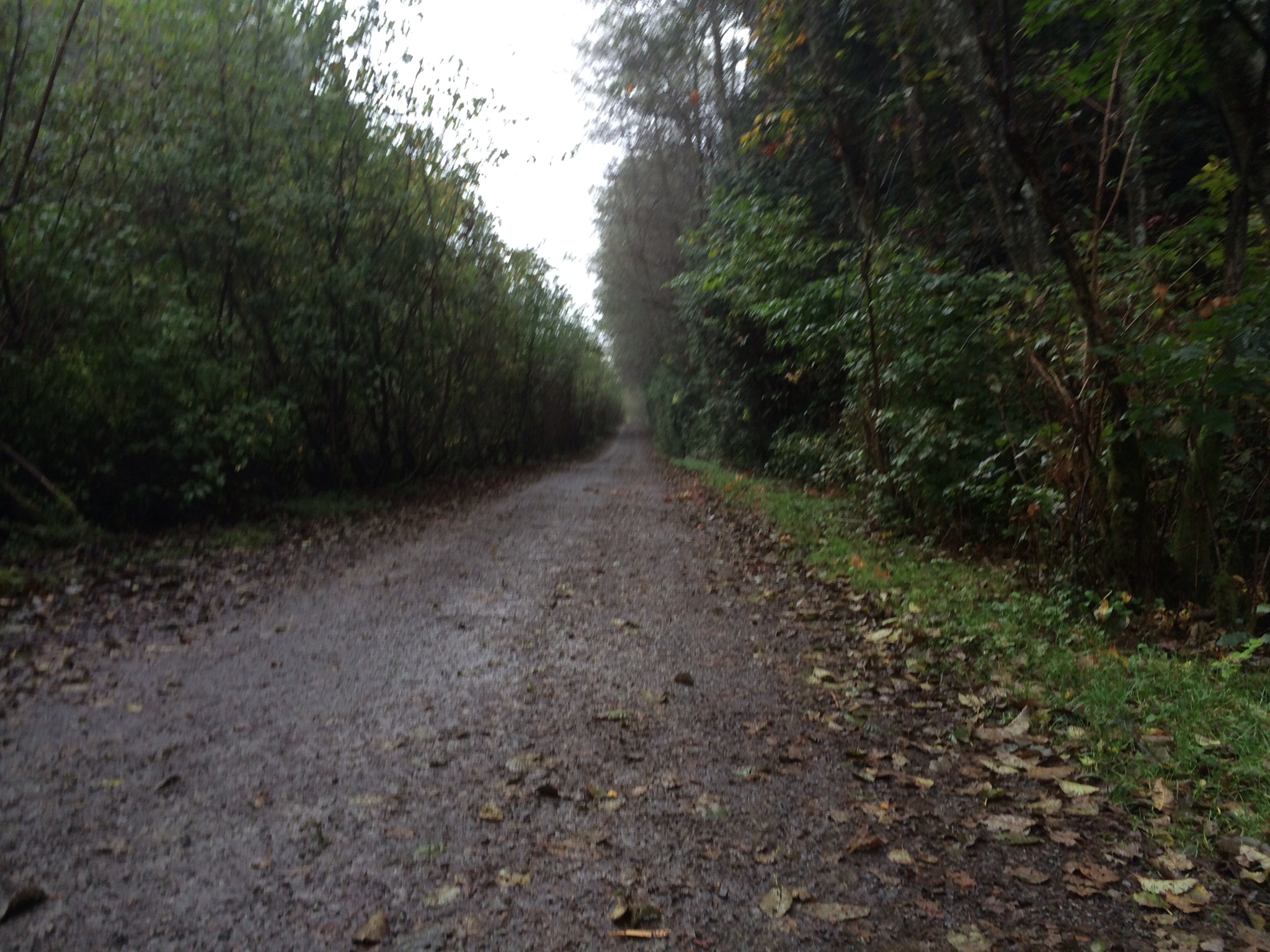
Imperial Trail, around mile 7
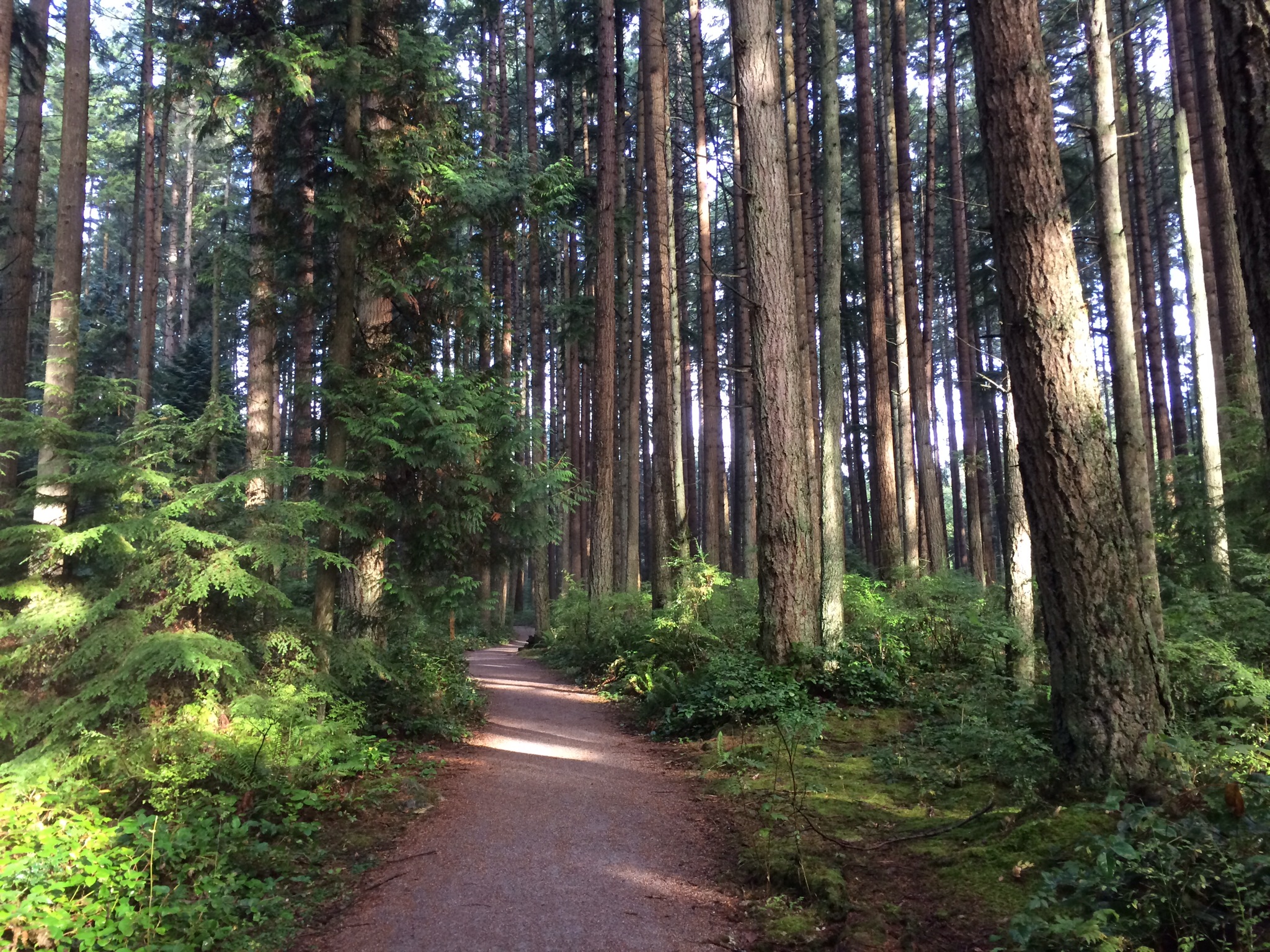
Salish Trail, between miles 8 and 9.
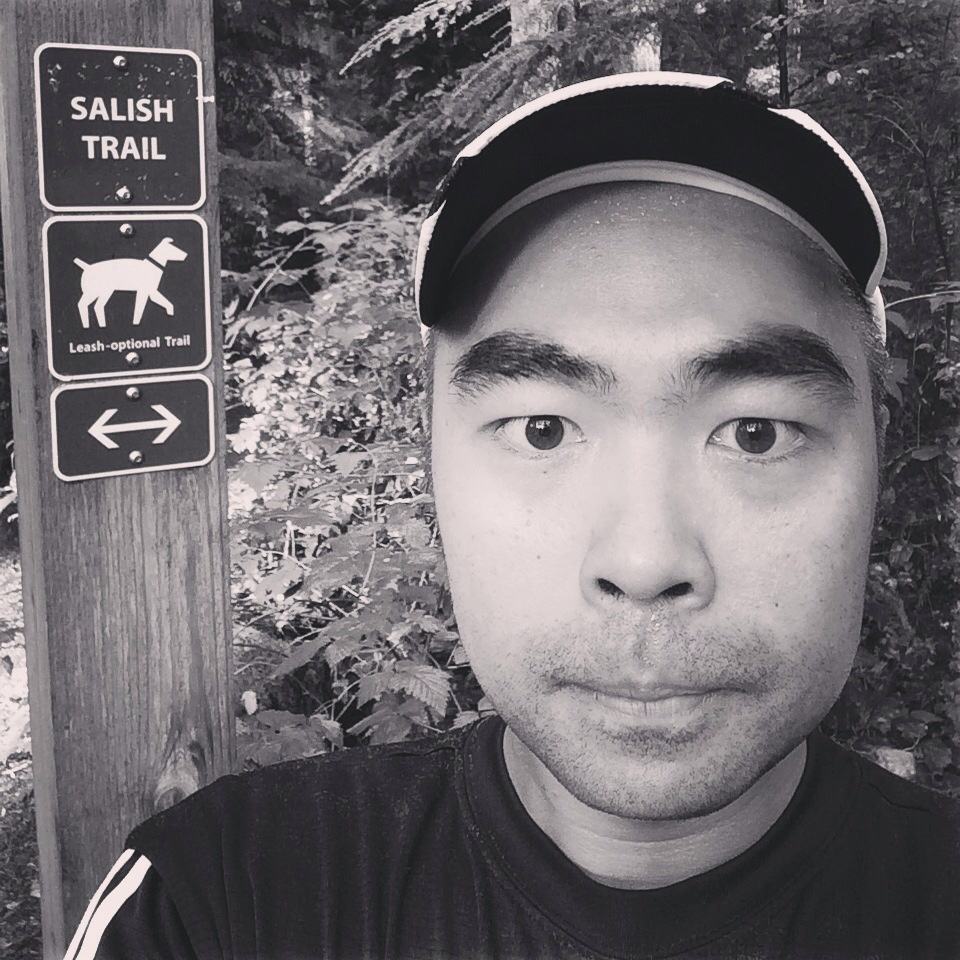
Selfie on Salish Trail
Maybe it was all the breaks I was taking for photos, or to consume gels & water, but I survived the almost four-hour run, completing 21 miles (33.9 km). My pacing was consistent, and even on the five separate miles I sped up, my legs were up to the challenge. I just have to be just as consistent with pacing and fueling, and I think I’ll do well for the big race. I just have to endure three weeks of agonizing taper!
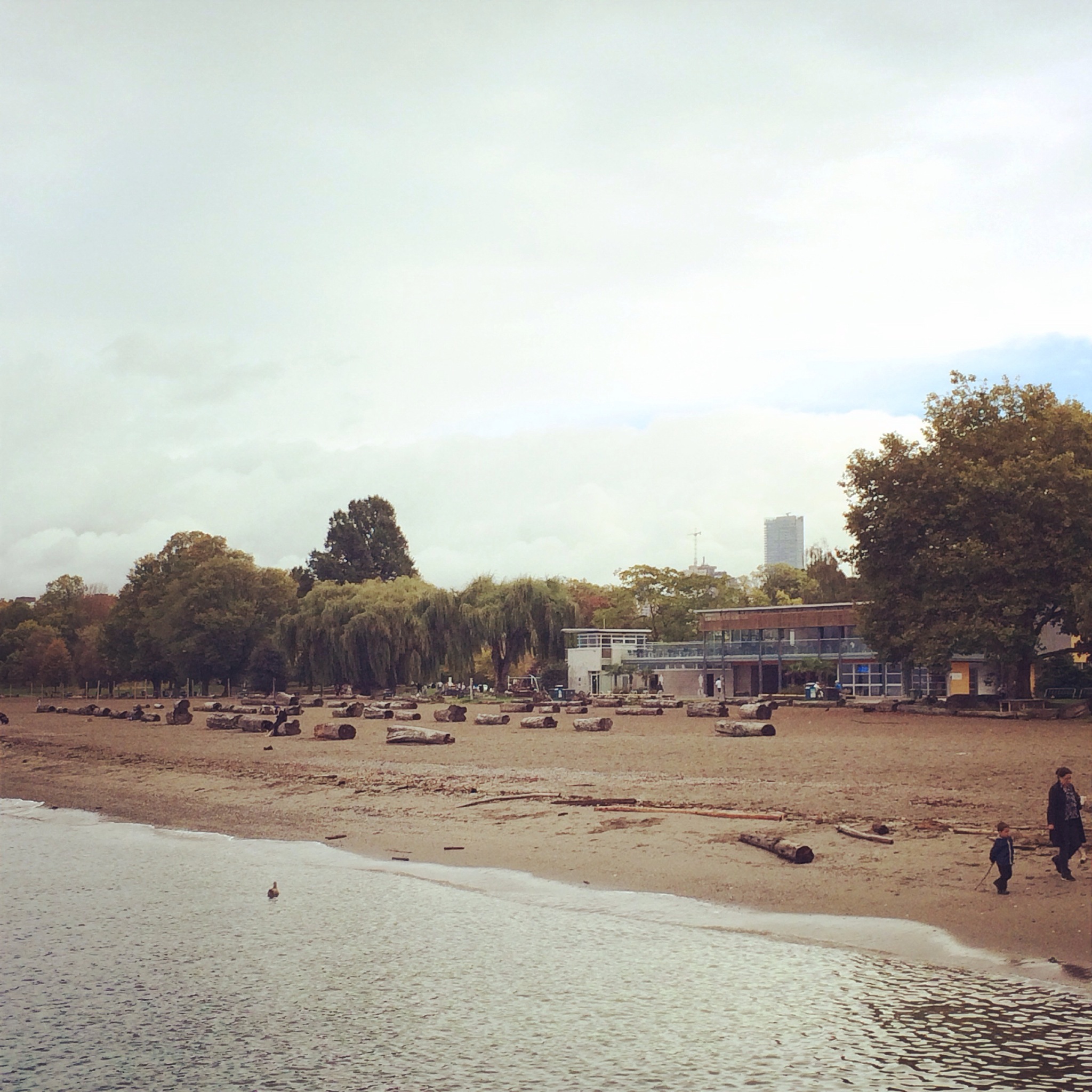
Kitsilano Beach, about mile 14.5
Race review: 2014 Vancouver Eastside 10k
Posted: 21 September 2014 Filed under: Running | Tags: east vancouver, eastside 10k, evrc, race report, runyvr 2 Comments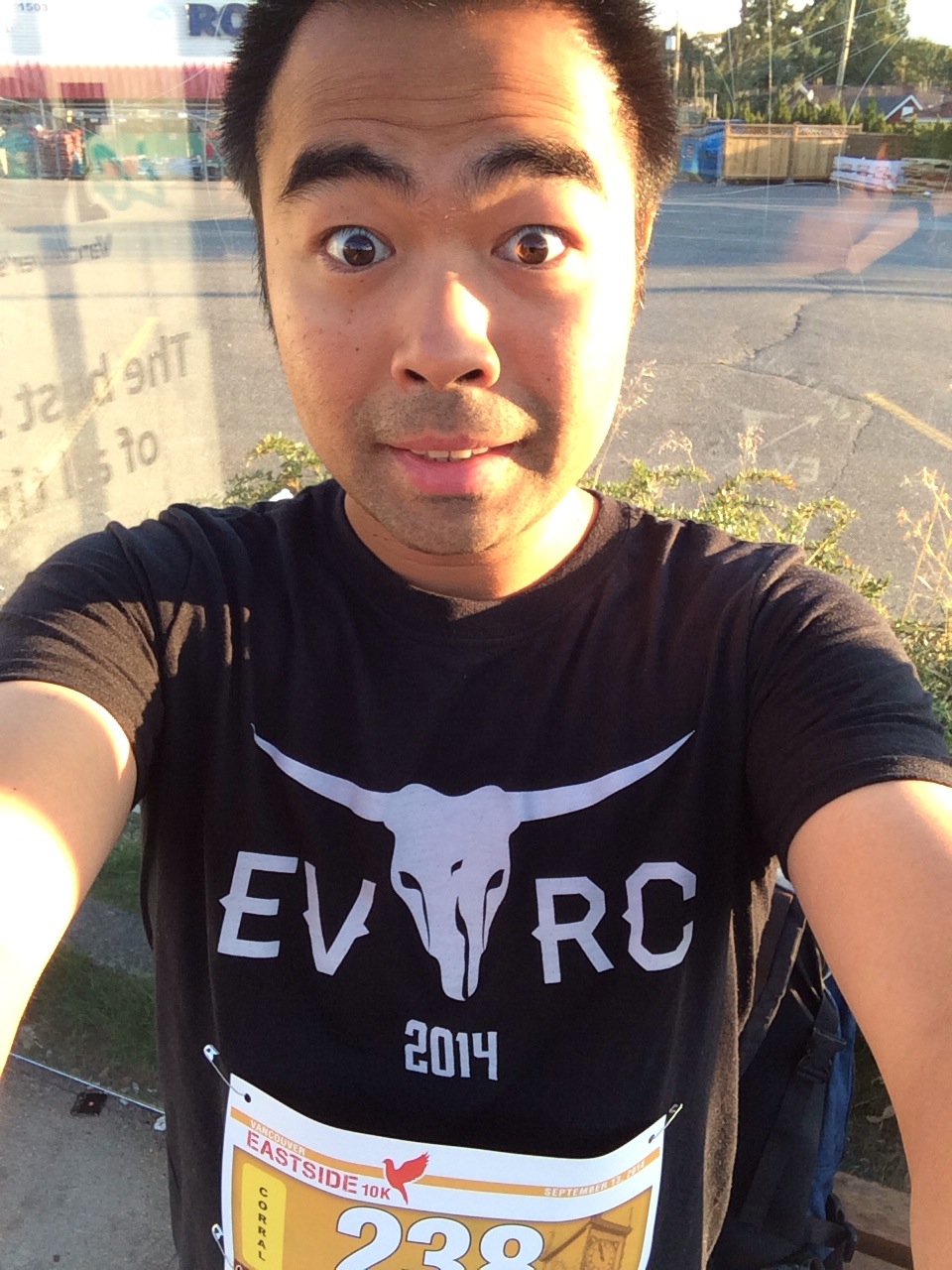
On the way to the start line
When I first ran this race last year, I immediately fell in love with it. The Eastside 10k has that something that makes it a go-to race to run each year. It could be the route, or the small number of participants, or the late-summer weather. This race has all three.
First, I’ll bring you up to speed on my current training progress. The Eastside 10k marks the halfway point of my training for the New York City Marathon. The week before the race, I finished a 16-mile long run in which I felt comfortable throughout, and didn’t feel too many aches at the end. I’m crossing my fingers that the really long runs (18- and 20-milers still to come) will go just as well.
Also this summer, I started running with the East Van Run Crew (EVRC), a very social group with a weekly run that starts and finishes in front of Parallel 49 Brewing. I couldn’t resist the run + beer combination! The organizer printed up a few shirts, and I wore one of them during the Eastside 10k.
I got up the morning of the race not feeling very well. I barely had my usual pre-race breakfast, and felt nauseated. (Looking back, I think the case can be made for carb overloading the day before.) Nevertheless, I got dressed and made my way to the start area. I wasn’t aiming for a personal best on this race, but I still want to get in a decent time of under 55 minutes. At bag check, I found Sarah, who also runs with EVRC and was also wearing one the crew’s shirts. (She posted a picture of both of us, with our shirts, on her instagram.)
Once I got to the start line, the nausea has mostly gone away, but I still wanted to be cautious. At the last moment, I also made the decision not to look at my watch once I start the timer. I figured that if I wasn’t chasing a PB, I could just run by feel and not worry about time. It was quite liberating, actually. Not once was I even tempted to glance at my watch to check on my progress. The only point when I had an inkling of my time was at the finish, which showed the gun time. My chip time ended up being 56:39, which is off my sub-55 goal, but considering what I had gone through, I’d say that was a decent finish.
I was greeted at the finish line by Alan Brookes, race director for the Canada Racing Series, which organizes the Eastside 10k. He must have seen my shirt, as he stopped me after I received my medal and took a picture of me. I don’t recall saying what he quoted (I did just race 10 km), but I’ll claim it:
And @heyrickie lookin gr8 4 @EastVanRunCrew at Finish Line #eastside10k "it's REALLY good racing the #DTES"! http://t.co/4N8ac5x2tx—
alan brookes, CRS (@alnbrookes) September 13, 2014
NYCM training is now in the 2nd half, and the excitement is building. Let’s get it done!
Result:
56:39 (5:39/km, 9:07/mi)
749/1462 overall
478/694 males
82/109 males 30-34


!["The world is a beautiful place yet eveyone [sic] is unhappy"](https://live.staticflickr.com/7603/26516802003_0506f5361b_s.jpg "\"The world is a beautiful place yet eveyone [sic] is unhappy\"")
 rickie rambles randomly
